MaryAnn L. Oakland |
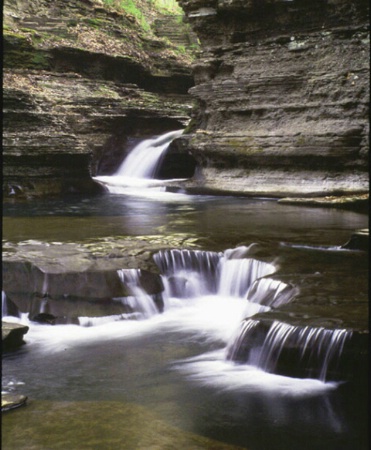
How to Shoot Waterfalls
|
||||||||||
|
|
|||||||||||
- Gregory LaGrange Contact Gregory LaGrange Gregory LaGrange's Gallery |
Go down to around 1/15. You need turbulence to get the effect. It usually looks better if it's an overcast day or if the water is in the shade.
|
||||||||||
|
|
|||||||||||
|
MaryAnn L. Oakland |
Thank you, will try that.
|
||||||||||
|
|
|||||||||||
|
Bob Cammarata |
The thing to keep in mind when selecting a shutter speed is that the human eye (and brain) sees motion at 1/60 second. A waterfall shot at that speed will look much it does to the naked eye. Any setting longer than that will cause the water to blur. Obviously, the longer the exposure time, the more pronounced the effect will be. What Gregory said about cloudy days or shade is very important, as it allows for the longer exposure times without blowing out the highlights. A slow film or ASA setting will help also. At ASA 100, speeds of 1 full second or more are possible on cloudy days or in deep shade.
|
||||||||||
|
|
|||||||||||
|
- Gregory LaGrange Contact Gregory LaGrange Gregory LaGrange's Gallery |
Better add that when I say go down to 1/15 of a second I mean correctly exposed at 1/15. Don't just put the shutter speed at that. You need an aperture that will give you 1/15, because I just noticed you said you overexposed at 160th. So you're about to really overexpose by just changing the shutter speed.
|
||||||||||
|
|
|||||||||||
|
Scott Pedersen |
In order to get the right shutter speed/aperture combination, you will need to use a slower film like 100 or maybe 200, and you will have to visit it in the evening or early morning. In the middle of the day you have too much light to get the right combination. Actually, early morning is the time to do it as there is usually no one else around to get into your photo.
|
||||||||||
|
|
|||||||||||
|
MaryAnn L. Oakland |
You have all been so helpful, thanks so much. I am going to print this out and follow this next chance I get.
|
||||||||||
|
|
|||||||||||
|
Darren K. Fisher |
When I am out shooting water, it is always done on an overcast day. This helps make the scene darker, along with using a polarizer, which darkens the scene more and helps take glare off of rocks. Another thing this does is gives you more realistic colors - on a normal day, your water will have blue tints and most likely hot spots. I normally use the settings of f/16 and anywhere from 1 sec or higher - the longer your exposure the more blurred your water will be. Another tip for you is to use a cable release or your timer on the camera. Hope this helps.
|
||||||||||
|
|
|||||||||||
|
Bill Lewis |
|
||||||||||
|
|
|||||||||||
|
This old forum is now archived. Use improved Forum here
Report this Thread |
|||||||||||